Month: October 2018

Deadlock in OS | Deadlock Problems | Questions

Deadlock in OS-


Before you go through this article, make sure that you have gone through the previous article on Deadlock in OS.


We have discussed-

  • In a deadlock state, the execution of multiple processes is blocked.
  • There are 4 necessary conditions for the occurrence of deadlock.
  • Several Deadlock Handling Strategies exist to deal with the deadlock.


In this article, we will discuss practice problems based on deadlock.


Important Concept-


Consider there are n processes in the system P1, P2, P3, …… , Pn where-

  • Process P1 requires xunits of resource R
  • Process P2 requires xunits of resource R
  • Process P3 requires xunits of resource R and so on.


In worst case,

The number of units that each process holds = One less than its maximum demand


So,

  • Process P1 holds x1 – 1 units of resource R
  • Process P2 holds x– 1 units of resource R
  • Process P3 holds x– 1 units of resource R and so on.


Now,

  • Had there been one more unit of resource R in the system, system could be ensured deadlock free.
  • This is because that unit would be allocated to one of the processes and it would get execute and then release its units.


From here, we have-


Maximum Number Of Units That Ensures Deadlock-


Maximum number of units of resource R that ensures deadlock

= (x1-1) + (x2-1) + (x3-1) + …. + (xn-1)

= ( x1 + x2 + x3 + …. + xn ) – n

= ∑xi – n

= Sum of max needs of all n processes – n


Minimum Number Of Units That Ensures No Deadlock-


Minimum number of units of resource R that ensures no deadlock

= One more than maximum number of units of resource R that ensures deadlock

= (∑xi – n) + 1


PRACTICE PROBLEMS BASED ON DEADLOCK IN OS-


Problem-01:


A system is having 3 user processes each requiring 2 units of resource R. The minimum number of units of R such that no deadlock will occur-

  1. 3
  2. 5
  3. 4
  4. 6


Solution-


In worst case,

The number of units that each process holds = One less than its maximum demand

So,

  • Process P1 holds 1 unit of resource R
  • Process P2 holds 1 unit of resource R
  • Process P3 holds 1 unit of resource R


Thus,

  • Maximum number of units of resource R that ensures deadlock = 1 + 1 + 1 = 3
  • Minimum number of units of resource R that ensures no deadlock = 3 + 1 = 4


Problem-02:


A system is having 10 user processes each requiring 3 units of resource R. The minimum number of units of R such that no deadlock will occur _____?


Solution-


In worst case,

The number of units that each process holds = One less than its maximum demand

So,

  • Process P1 holds 2 units of resource R
  • Process P2 holds 2 units of resource R
  • Process P3 holds 2 units of resource R and so on.
  • Process P10 holds 2 units of resource R


Thus,

  • Maximum number of units of resource R that ensures deadlock = 10 x 2 = 20
  • Minimum number of units of resource R that ensures no deadlock = 20 + 1 = 21


Problem-03:


A system is having 3 user processes P1, P2 and P3 where P1 requires 2 units of resource R, P2 requires 3 units of resource R, P3 requires 4 units of resource R. The minimum number of units of R that ensures no deadlock is _____?


Solution-


In worst case,

The number of units that each process holds = One less than its maximum demand

So,

  • Process P1 holds 1 unit of resource R
  • Process P2 holds 2 units of resource R
  • Process P3 holds 3 units of resource R


Thus,

  • Maximum number of units of resource R that ensures deadlock = 1 + 2 + 3 = 6
  • Minimum number of units of resource R that ensures no deadlock = 6 + 1 = 7


Problem-04:


A system is having 3 user processes P1, P2 and P3 where P1 requires 21 units of resource R, P2 requires 31 units of resource R, P3 requires 41 units of resource R. The minimum number of units of R that ensures no deadlock is _____?


Solution-


In worst case,

The number of units that each process holds = One less than its maximum demand

So,

  • Process P1 holds 20 units of resource R
  • Process P2 holds 30 units of resource R
  • Process P3 holds 40 units of resource R


Thus,

  • Maximum number of units of resource R that ensures deadlock = 20 + 30 + 40 = 90
  • Minimum number of units of resource R that ensures no deadlock = 90 + 1 = 91


Problem-05:


If there are 6 units of resource R in the system and each process in the system requires 2 units of resource R, then how many processes can be present at maximum so that no deadlock will occur?


Solution-


In worst case,

The number of units that each process holds = One less than its maximum demand

So,

  • Process P1 holds 1 unit of resource R
  • Process P2 holds 1 unit of resource R
  • Process P3 holds 1 unit of resource R
  • Process P4 holds 1 unit of resource R
  • Process P5 holds 1 unit of resource R
  • Process P6 holds 1 unit of resource R


Thus,

  • Minimum number of processes that ensures deadlock = 6
  • Maximum number of processes that ensures no deadlock = 6 – 1 = 5


Problem-06:


If there are 6 units of resource R in the system and each process in the system requires 3 units of resource R, then how many processes can be present at maximum so that no deadlock will occur?


Solution-


In worst case,

The number of units that each process holds = One less than its maximum demand

So,

  • Process P1 holds 2 units of resource R
  • Process P2 holds 2 units of resource R
  • Process P3 holds 2 units of resource R


Thus,

  • Minimum number of processes that ensures deadlock = 3
  • Maximum number of processes that ensures no deadlock = 3 – 1 = 2


Problem-07:


If there are 100 units of resource R in the system and each process in the system requires 2 units of resource R, then how many processes can be present at maximum so that no deadlock will occur?


Solution-


In worst case,

The number of units that each process holds = One less than its maximum demand

So,

  • Process P1 holds 1 unit of resource R
  • Process P2 holds 1 unit of resource R
  • Process P3 holds 1 unit of resource R and so on.
  • Process P100 holds 1 unit of resource R


Thus,

  • Minimum number of processes that ensures deadlock = 100
  • Maximum number of processes that ensures no deadlock = 100 – 1 = 99


Problem-08:


If there are 100 units of resource R in the system and each process in the system requires 4 units of resource R, then how many processes can be present at maximum so that no deadlock will occur?


Solution-


In worst case,

The number of units that each process holds = One less than its maximum demand

So,

  • Process P1 holds 3 units of resource R
  • Process P2 holds 3 units of resource R
  • Process P3 holds 3 units of resource R and so on.
  • Process P33 holds 3 units of resource R
  • Process P34 holds 1 unit of resource R


Thus,

  • Minimum number of processes that ensures deadlock = 34
  • Maximum number of processes that ensures no deadlock = 34 – 1 = 33


Problem-09:


If there are 100 units of resource R in the system and each process in the system requires 5 units of resource R, then how many processes can be present at maximum so that no deadlock will occur?


Solution-


In worst case,

The number of units that each process holds = One less than its maximum demand

So,

  • Process P1 holds 4 units of resource R
  • Process P2 holds 4 units of resource R
  • Process P3 holds 4 units of resource R and so on.
  • Process P25 holds 4 units of resource R


Thus,

  • Minimum number of processes that ensures deadlock = 25
  • Maximum number of processes that ensures no deadlock = 25 – 1 = 24


Problem-10:


A computer system has 6 tape drives with n processes competing for them. Each process needs 3 tape drives. The maximum value of n for which the system is guaranteed to be deadlock free-

  1. 2
  2. 3
  3. 4
  4. 1


Solution-


In worst case,

The number of tape drives that each process holds = One less than its maximum demand

So,

  • Process P1 holds 2 tape drives
  • Process P2 holds 2 tape drives
  • Process P3 holds 2 tape drives


Thus,

  • Minimum number of processes that ensures deadlock = 3
  • Maximum number of processes that ensures no deadlock = 3 – 1 = 2


Problem-11:


Consider a system having m resources of the same type. These resources are shared by 3 processes A, B and C which have peak demands of 3, 4 and 6 respectively. For what value of m, deadlock will not occur?

  1. 7
  2. 9
  3. 10
  4. 13


Solution-


In worst case,

The number of units that each process holds = One less than its maximum demand

So,

  • Process A holds 2 units of resource R
  • Process B holds 3 units of resource R
  • Process C holds 5 units of resource R


Thus,

  • Maximum number of units of resource R that ensures deadlock = 2 + 3 + 5 = 10
  • Minimum number of units of resource R that ensures no deadlock = 10 + 1 = 11


So, any number of units greater than 11 will ensure no deadlock.

Thus, Option (D) is correct.


Problem-12:


Consider a system having m resources of the same type being shared by n processes. Resources can be requested and released by processes only one at a time. The system is deadlock free if and only if-

  1. The sum of all max needs is < m+n
  2. The sum of all max needs is > m+n
  3. Both of above
  4. None of these


Solution-


We have derived above-

Maximum number of units of resource R that ensures deadlock = (∑xi – n)


Thus, For no deadlock occurrence,

Number of units of resource R must be > (∑xi – n)

i.e. m > (∑xi – n)

or ∑xi < m + n

Thus, Correct Option is (A).


Problem-13:


Consider the following snapshot of a system running n processes. Process i is holding xi instances of a resource R for 1<=i<=n. Currently, all instances of R are occupied. Further, for all i, process i has placed a request for an additional yi instances while holding the xi instances it already has. There are exactly two processes p and q such that yp = yq = 0. Which of the following can serve as a necessary condition to guarantee that the system is not approaching a deadlock?

  1. min(xp, xq) < maxk≠p,qyk
  2. xp + xq >= mink≠p,qyk
  3. min(xp, xq) < 1
  4. min(xp, xq) >1


Solution-


According to question, we have-
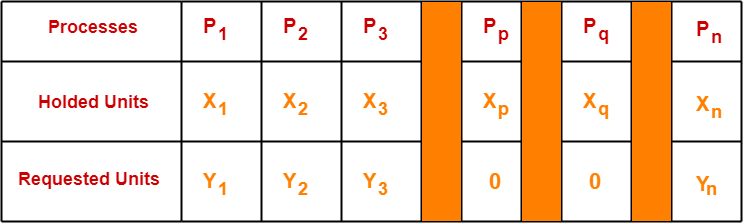


  • Clearly, processes Pp and Pq do not require any additional resource.
  • So they continue their execution.
  • After getting executed completely, they release the units allocated to them.
  • Thus, the total units that get free up = xp + xq


Now,

  • To ensure that other processes are executed without any deadlock, the total amount of units freely available currently ( xp + xq ) must be able to meet the requirements of some other process.
  • If available ( xp + x) units could not meet the requirement of any other process, then certainly there would be deadlock.


Thus, for no deadlock, the necessary condition is-

xp + xq >= min yk where k ≠ p, q

Thus, Correct Option is (B).


NOTE-


  • It is very important to note that the above condition is just a necessary condition and not at all a sufficient condition to avoid the deadlock.
  • The above condition just ensures that the system is able to proceed from the current state.
  • It does not guarantee that there won’t be a deadlock before all the other processes are finished.
  • The sufficient condition to avoid the deadlock would be either xp + xq >= ∑ yi or xp + xq >= max yk where k ≠ p, q.


To watch video solutions and practice other problems,

Watch this Video Lecture


Next Article- Banker’s Algorithm


Get more notes and other study material of Operating System.

Watch video lectures by visiting our YouTube channel LearnVidFun.

Deadlock Detection | Deadlock Prevention

Deadlock Handling-


Before you go through this article, make sure that you have gone through the previous article on Deadlock in OS.


The various strategies for handling deadlock are-


  1. Deadlock Prevention
  2. Deadlock Avoidance
  3. Deadlock Detection and Recovery
  4. Deadlock Ignorance


Deadlock Prevention-


  • This strategy involves designing a system that violates one of the four necessary conditions required for the occurrence of deadlock.
  • This ensures that the system remains free from the deadlock.


The various conditions of deadlock occurrence may be violated as-


1. Mutual Exclusion-


  • To violate this condition, all the system resources must be such that they can be used in a shareable mode.
  • In a system, there are always some resources which are mutually exclusive by nature.
  • So, this condition can not be violated.


2. Hold and Wait-


This condition can be violated in the following ways-


Approach-01:


In this approach,

  • A process has to first request for all the resources it requires for execution.
  • Once it has acquired all the resources, only then it can start its execution.
  • This approach ensures that the process does not hold some resources and wait for other resources.


Drawbacks-


The drawbacks of this approach are-

  • It is less efficient.
  • It is not implementable since it is not possible to predict in advance which resources will be required during execution.


Approach-02:


In this approach,

  • A process is allowed to acquire the resources it desires at the current moment.
  • After acquiring the resources, it start its execution.
  • Now before making any new request, it has to compulsorily release all the resources that it holds currently.
  • This approach is efficient and implementable.


Approach-03:


In this approach,

  • A timer is set after the process acquires any resource.
  • After the timer expires, a process has to compulsorily release the resource.


3. No Preemption-


  • This condition can by violated by forceful preemption.
  • Consider a process is holding some resources and request other resources that can not be immediately allocated to it.
  • Then, by forcefully preempting the currently held resources, the condition can be violated.


A process is allowed to forcefully preempt the resources possessed by some other process only if-
  • It is a high priority process or a system process.
  • The victim process is in the waiting state.


4. Circular Wait-


  • This condition can be violated by not allowing the processes to wait for resources in a cyclic manner.
  • To violate this condition, the following approach is followed-


Approach-


  • A natural number is assigned to every resource.
  • Each process is allowed to request for the resources either in only increasing or only decreasing order of the resource number.
  • In case increasing order is followed, if a process requires a lesser number resource, then it must release all the resources having larger number and vice versa.
  • This approach is the most practical approach and implementable.
  • However, this approach may cause starvation but will never lead to deadlock.


Deadlock Avoidance-


  • This strategy involves maintaining a set of data using which a decision is made whether to entertain the new request or not.
  • If entertaining the new request causes the system to move in an unsafe state, then it is discarded.
  • This strategy requires that every process declares its maximum requirement of each resource type in the beginning.
  • The main challenge with this approach is predicting the requirement of the processes before execution.
  • Banker’s Algorithm is an example of a deadlock avoidance strategy.


Deadlock Detection and Recovery-


  • This strategy involves waiting until a deadlock occurs.
  • After deadlock occurs, the system state is recovered.
  • The main challenge with this approach is detecting the deadlock.


Deadlock Ignorance-


  • This strategy involves ignoring the concept of deadlock and assuming as if it does not exist.
  • This strategy helps to avoid the extra overhead of handling deadlock.
  • Windows and Linux use this strategy and it is the most widely used method.
  • It is also called as Ostrich approach.


To gain better understanding about Deadlock Handling Strategies,

Watch this Video Lecture


Next Article- Practice Problems On Deadlock


Get more notes and other study material of Operating System.

Watch video lectures by visiting our YouTube channel LearnVidFun.
Deadlock in OS | Conditions for Deadlock

Deadlock in OS-


Deadlock is a situation where-

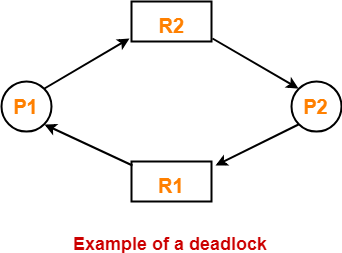
  • The execution of two or more processes is blocked because each process holds some resource and waits for another resource held by some other process.


Example-


Here

  • Process P1 holds resource R1 and waits for resource R2 which is held by process P2.
  • Process P2 holds resource R2 and waits for resource R1 which is held by process P1.
  • None of the two processes can complete and release their resource.
  • Thus, both the processes keep waiting infinitely.


Conditions For Deadlock-


There are following 4 necessary conditions for the occurrence of deadlock-

  1. Mutual Exclusion
  2. Hold and Wait
  3. No preemption
  4. Circular wait


1. Mutual Exclusion-


By this condition,

  • There must exist at least one resource in the system which can be used by only one process at a time.
  • If there exists no such resource, then deadlock will never occur.
  • Printer is an example of a resource that can be used by only one process at a time.


2. Hold and Wait-


By this condition,

  • There must exist a process which holds some resource and waits for another resource held by some other process.


3. No Preemption-


By this condition,

  • Once the resource has been allocated to the process, it can not be preempted.
  • It means resource can not be snatched forcefully from one process and given to the other process.
  • The process must release the resource voluntarily by itself.


4. Circular Wait-


By this condition,

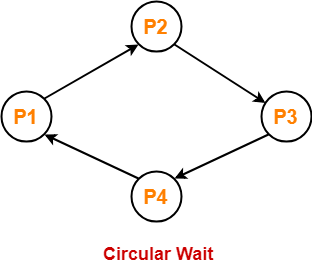
  • All the processes must wait for the resource in a cyclic manner where the last process waits for the resource held by the first process.


Here,

  • Process P1 waits for a resource held by process P2.
  • Process P2 waits for a resource held by process P3.
  • Process P3 waits for a resource held by process P4.
  • Process P4 waits for a resource held by process P1.


Important Note-


  • All these 4 conditions must hold simultaneously for the occurrence of deadlock.
  • If any of these conditions fail, then the system can be ensured deadlock free.


To gain better understanding about Deadlock in OS,

Watch this Video Lecture


Next Article- Deadlock Handling Strategies


Get more notes and other study material of Operating System.

Watch video lectures by visiting our YouTube channel LearnVidFun.
HRRN Scheduling | CPU Scheduling

HRRN Scheduling-


In HRRN Scheduling,

  • Out of all the available processes, CPU is assigned to the process having highest response ratio.
  • In case of a tie, it is broken by FCFS Scheduling.
  • It operates only in non-preemptive mode.


Calculating Response Ratio-


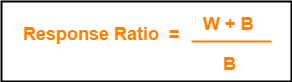
Response Ratio (RR) for any process is calculated by using the formula-


where-

  • W = Waiting time of the process so far
  • B = Burst time or Service time of the process


Advantages-


  • It performs better than SJF Scheduling.
  • It not only favors the shorter jobs but also limits the waiting time of longer jobs.


Disadvantages-


  • It can not be implemented practically.
  • This is because burst time of the processes can not be known in advance.


PRACTICE PROBLEM BASED ON HRRN SCHEDULING-


Problem-


Consider the set of 5 processes whose arrival time and burst time are given below-


Process Id Arrival time Burst time
P0 0 3
P1 2 6
P2 4 4
P3 6 5
P4 8 2


If the CPU scheduling policy is Highest Response Ratio Next, calculate the average waiting time and average turn around time.


Solution-


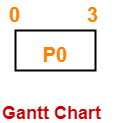
Step-01:


  • At t = 0, only the process P0 is available in the ready queue.
  • So, process P0 executes till its completion.


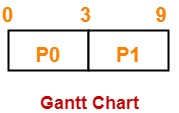
Step-02:


  • At t = 3, only the process P1 is available in the ready queue.
  • So, process P1 executes till its completion.


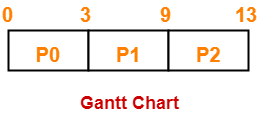
Step-03:


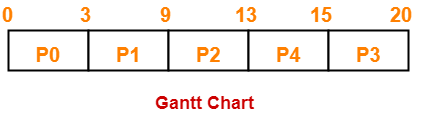
  • At t = 9, the processes P2, P3 and P4 are available in the ready queue.
  • The process having the highest response ratio will be executed next.


The response ratio are-

  • Response Ratio for process P2 = [(9-4) + 4] / 4 = 9 / 4 = 2.25
  • Response Ratio for process P3 = [(9-6) + 5] / 5 = 8 / 5 = 1.6
  • Response Ratio for process P4 = [(9-8) + 2] / 2 = 3 / 2 = 1.5


Since process P2 has the highest response ratio, so process P2 executes till completion.


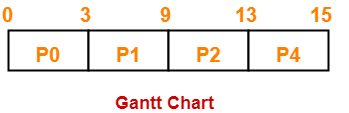
Step-04:


  • At t = 13, the processes P3 and P4 are available in the ready queue.
  • The process having the highest response ratio will be executed next.


The response ratio are calculated as-

  • Response Ratio for process P3 = [(13-6) + 5] / 5 = 12 / 5 = 2.4
  • Response Ratio for process P4 = [(13-8) + 2] / 2 = 7 / 2 = 3.5


Since process P4 has the highest response ratio, so process P4 executes till completion.


Step-05:


  • At t = 15, only the process P3 is available in the ready queue.
  • So, process P3 executes till its completion.


Now, we know-

  • Turn Around time = Exit time – Arrival time
  • Waiting time = Turn Around time – Burst time


Also read- Various Times of Process


Process Id Exit time Turn Around time Waiting time
P0 3 3 – 0 = 3 3 – 3 = 0
P1 9 9 – 2 = 7 7 – 6 = 1
P2 13 13 – 4 = 9 9 – 4 = 5
P3 20 20 – 6 = 14 14 – 5 = 9
P4 15 15 – 8 = 7 7 – 2 = 5


Now,

  • Average Turn Around time = (3 + 7 + 9 + 14 + 7) / 5 = 40 / 5 = 8 units
  • Average waiting time = (0 + 1 + 5 + 9 + 5) / 5 = 20 / 5 = 4 units


To gain better understanding about HRRN Scheduling,

Watch this Video Lecture


Next Article- Round Robin Scheduling


Get more notes and other study material of Operating System.

Watch video lectures by visiting our YouTube channel LearnVidFun.
Predicting Burst Time | SJF Scheduling

SJF Scheduling-


Before you go through this article, make sure that you have gone through the previous article on SJF Scheduling.


In SJF Scheduling,

  • Out of all the available processes, CPU is assigned to the process having smallest burst time.
  • The main drawback of SJF Scheduling is that it can not be implemented practically.
  • This is because burst time of the processes can not be known in advance.


In this article, we will discuss techniques to predict burst time.


Techniques to Predict Burst Time-


There are several techniques which try to predict the burst time for the processes so that the algorithm can be implemented.

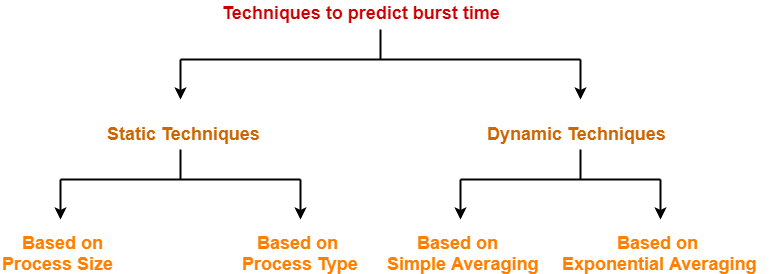
These techniques are-


Static Techniques-


There are two static techniques-

  1. Based on process size
  2. Based on process type


1. Based on Process Size-


  • This technique predicts the burst time for a process based on its size.
  • Burst time of the already executed process of similar size is taken as the burst time for the process to be executed.


Example-


  • Consider a process of size 200 KB took 20 units of time to complete its execution.
  • Then, burst time for any future process having size around 200 KB can be taken as 20 units.


NOTE

  • The predicted burst time may not always be right.
  • This is because the burst time of a process also depends on what kind of a process it is.


2. Based on Process Type-


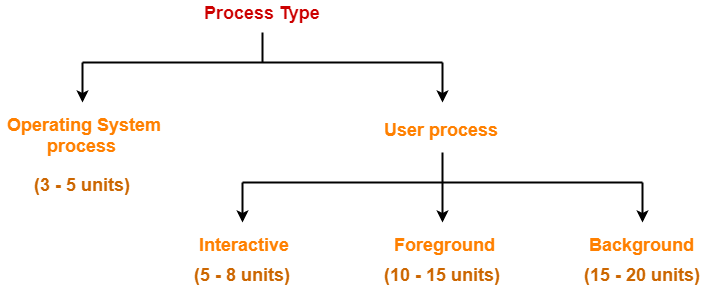
  • This technique predicts the burst time for a process based on its type.
  • The following figure shows the burst time assumed for several kinds of processes.


Dynamic Techniques-


There are two dynamic techniques-

  1. Based on simple averaging
  2. Based on exponential averaging


1. Based on Simple Averaging-


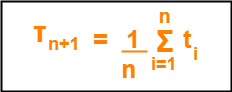
  • Burst time for the process to be executed is taken as the average of all the processes that are executed till now.
  • Given n processes P1, P2, … , Pn and burst time of each process Pi as ti, then predicted burst time for process Pn+1 is given as-


2. Based on Exponential Averaging-


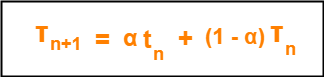
  • Given n processes P1, P2, … , Pn and burst time of each process Pi as ti. Then, predicted burst time for process Pn+1 is given as-


where-

  • α is called smoothening factor (0<= α <=1)
  • tn = actual burst time of process Pn
  • Tn = Predicted burst time for process Pn


PRACTICE PROBLEM BASED ON PREDICTING BURST TIME-


Problem-


Calculate the predicted burst time using exponential averaging for the fifth process if the predicted burst time for the first process is 10 units and actual burst time of the first four processes is 4, 8, 6 and 7 units respectively. Given α = 0.5.


Solution-


Given-

  • Predicted burst time for 1st process = 10 units
  • Actual burst time of the first four processes = 4, 8, 6, 7
  • α = 0.5


Predicted Burst Time for 2nd Process-


Predicted burst time for 2nd process

= α x Actual burst time of 1st process + (1-α) x Predicted burst time for 1st process

= 0.5 x 4 + 0.5 x 10

= 2 + 5

= 7 units


Predicted Burst Time for 3rd Process-


Predicted burst time for 3rd process

= α x Actual burst time of 2nd process + (1-α) x Predicted burst time for 2nd process

= 0.5 x 8 + 0.5 x 7

= 4 + 3.5

= 7.5 units


Predicted Burst Time for 4th Process-


Predicted burst time for 4th process

= α x Actual burst time of 3rd process + (1-α) x Predicted burst time for 3rd process

= 0.5 x 6 + 0.5 x 7.5

= 3 + 3.75

= 6.75 units


Predicted Burst Time for 5th Process-


Predicted burst time for 5th process

= α x Actual burst time of 4th process + (1-α) x Predicted burst time for 4th process

= 0.5 x 7 + 0.5 x 6.75

= 3.5 + 3.375

= 6.875 units


To gain better understanding about predicting burst time,

Watch this Video Lecture


Next Article- LJF Scheduling | LRTF Scheduling


Get more notes and other study material of Operating System.

Watch video lectures by visiting our YouTube channel LearnVidFun.